When multiple workers service a single machine, coordinating lockout tagout (LOTO) isn’t just complicated—it’s dangerous if done wrong. A single misstep can leave energy sources unsecured, risking severe injury or fatalities. That’s where the lockout tagout group lock box becomes essential. It’s not just another safety accessory; it’s a systematic solution designed to manage multi-person lockout procedures with precision and accountability.
This isn’t about slapping extra locks on a disconnect. It’s about creating a controlled, verifiable process where every worker maintains individual control over their safety—while enabling team coordination. Misunderstanding its role leads to procedural gaps, false confidence, and OSHA violations. Here’s how to get it right.
Why Standard LOTO Falls Short
With Multiple Workers
Traditional lockout procedures assume one authorized employee controls one energy source. But real-world maintenance often involves electricians, mechanics, operators, and technicians—all needing to work on the same machine or system. Applying individual locks directly to isolation points quickly becomes unmanageable.
Common problems include: - No central control point for verifying all workers are clear - Overcrowded energy-isolation devices with too many locks - Difficulty identifying who locked what and when - Increased risk of accidental re-energization if one person removes their lock prematurely
Without a structured method, teams resort to workarounds—like leaving locks on after work is done or bypassing LOTO altogether. A group lock box solves these issues by centralizing control while preserving individual accountability.
How a Lockout Tagout Group Lock Box Works
A group lock box (also called a group lockout station or hasp box) acts as a central repository for padlock keys during multi-person maintenance. Here’s the standard workflow:
- Primary lockout: The first authorized employee isolates the main energy source (electrical, hydraulic, pneumatic, etc.) using a lockout device.
- Secure the key: Instead of removing the energy-isolating device’s handle, they place the key inside the group lock box.
- Lock the box: The first worker applies their personal padlock to the box, trapping the key inside.
- Subsequent workers: Each additional team member applies their own lock to the same box.
- Work begins: Only when all locks are in place—and all workers are clear—can maintenance begin.
- Completion: Each worker removes their lock only after confirming their portion of the work is complete. The last person removes the box, retrieves the key, and safely re-energizes the machine.
This ensures no single person can restart equipment until every worker has completed their task and removed their lock.
Real-World Use Case: Conveyor System Maintenance

Consider a packaging line with a jammed conveyor. The issue requires: - A mechanic to disassemble the drive mechanism - An electrician to inspect motor controls - A technician to recalibrate sensors
Each worker must ensure the system stays de-energized. Using a group lock box: - The mechanic isolates the main disconnect and places the handle in the box. - The electrician and technician each add their locks. - All three perform their tasks independently but safely. - As each finishes, they remove their lock. - The last worker—say, the electrician—removes the box, restores power, and tests the system.
Without the box, they’d either cluster locks on the disconnect (risking confusion) or rely on verbal confirmation (a compliance red flag).
Key Features of an Effective Group Lock Box
Not all lock boxes are created equal. To avoid weak links in your LOTO chain, look for these features:
- Durable construction: Steel or reinforced polymer to resist tampering and environmental damage.
- Clear visibility: Transparent lid or window to see the stored key or hasp.
- Multiple lock points: Accepts at least 6–12 padlocks to accommodate team sizes.
- Mounting options: Wall brackets or stand mounts for permanent placement near high-risk equipment.
- Labeling area: Space for warnings like “Do Not Open Until All Locks Are Removed.”
- Weather resistance: For outdoor or washdown environments (NEMA 4 or IP65 rated).
A poorly designed box—flimsy, unclear, or too small—undermines the entire procedure. Invest in quality.
Common Mistakes That Break the LOTO Chain
Even with a group lock box, failures occur due to procedural errors. Watch for these:
1. Using the box for non-LOTO storage Some teams stash spare keys or tools inside, creating confusion. The box must be dedicated solely to active LOTO procedures.
2. Skipping individual locks A team lead might use a single lock for the whole group. This violates OSHA’s requirement for individual control—each worker must apply their own lock.
3. Leaving the box unattended during breaks If workers leave the area, the box must remain locked. Removing locks during lunch or shift changes defeats the purpose.
4. Failing to train temporary or contract workers Outside technicians often aren’t trained on your LOTO system. They must follow the same protocol—even if it’s unfamiliar.
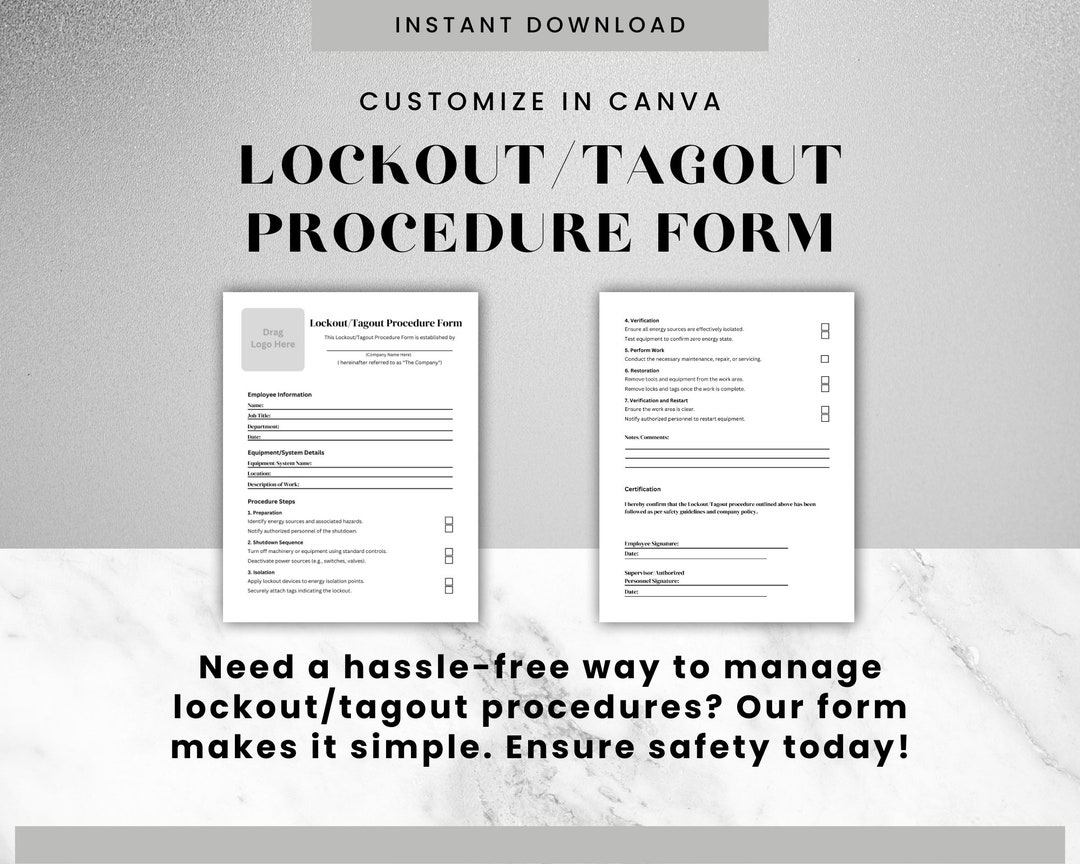
5. Not using tags with locks A lock without a tag (name, date, department) makes accountability impossible. Always pair with a standardized tagout form.
These aren’t minor oversights. They’re direct violations of 29 CFR 1910.147 and can result in fines or worse.
Top 5 Group Lock Box Models for Industrial Use
Choosing the right box matters. Here are five trusted options used in manufacturing, utilities, and processing plants:

| Model | Lock Capacity | Material | Key Features |
|---|---|---|---|
| Grace Industries GLO-12 | 12 locks | Steel | Clear window, wall-mount, NEMA 4 rated |
| Master Lock 1690D | 10 locks | Polycarbonate | See-through, weather-resistant, stackable |
| Bernard LB-10 | 10 locks | Steel | Heavy-duty, includes internal hasp, lockable shackle |
| Seton 64-6445 | 6 locks | Reinforced plastic | Budget-friendly, easy labeling, indoor use |
| Justrite 22306 | 13 locks | Steel | Dual compartments, corrosion-resistant, outdoor rated |
Best for large teams: Grace GLO-12 or Justrite 22306 Best for tight budgets: Seton 64-6445 Best for harsh environments: Master Lock 1690D or Justrite 22306
Always match the box to your team size, environment, and equipment complexity.
Integrating Group Lock Boxes Into Your LOTO Program
A lock box is useless without a clear procedure. Update your energy control program to include:
- Standard operating procedure (SOP): Detail steps for using the box, including who places the initial lock and how keys are managed.
- Training modules: Conduct hands-on drills showing proper use and common mistakes.
- Audit checklists: Include box usage in routine LOTO audits.
- Visual aids: Post diagrams near equipment showing the lock box process.
For example, a chemical plant might place a labeled group lock box station next to a reactor’s main disconnect, with a laminated flowchart showing each step. Workers follow the same process every time—no improvisation.
Limitations and When to Use Alternatives
Group lock boxes aren’t universal. They work best when: - All workers are present during the entire maintenance window - One primary energy source controls the hazard - Teams are small to mid-sized (2–12 people)
They’re less effective when: - Workers arrive or leave at different times (shift handover) - Multiple energy sources require isolation - Remote or automated systems complicate access
In such cases, consider LOTO permit systems, electronic lockout solutions, or sequential isolation procedures with written handover logs.
No tool replaces sound procedure. The group lock box is a facilitator—not a fix for poor planning.
Final Thoughts: Safety Is a Chain—Make Every Link Count
A lockout tagout group lock box isn’t about convenience. It’s about creating a verifiable, tamper-resistant system where every worker maintains control over their safety. When used correctly, it eliminates guesswork, enforces accountability, and aligns with OSHA’s core LOTO principles.
But it only works if your team understands the why, not just the how. Train rigorously. Audit consistently. And never let shortcuts erode the system. A single failure can undo years of safety progress.
Start by auditing your current multi-person lockout procedures. If you’re relying on verbal agreement or overcrowded lock points, implement a group lock box system—today. Your team’s safety depends on it.
Frequently Asked Questions
What is the purpose of a group lockout box? It allows multiple workers to lock out a single energy source safely by securing the isolation device’s key until all personnel have completed their tasks and removed their locks.
Can a supervisor remove a worker’s lock from the box? Only under strict emergency procedures involving management, verification of employee status, and documented follow-up. Otherwise, only the original worker should remove their lock.
How many locks can a group lock box hold? Most models support 6 to 13 padlocks. Choose based on your largest typical maintenance team.
Is a group lock box required by OSHA? OSHA doesn’t mandate a specific device, but it requires individual worker control during group lockout. A group lock box is a widely accepted method to meet this requirement.
Can we use a group lock box for shift handovers? Not directly. Standard group lock boxes assume all workers are present. For shift changes, use a formal lockout permit system with written transfers.
Do all workers need to see the key inside the box? Visibility helps verify the key is secured, but the critical factor is that the key cannot be accessed until all locks are removed.
Should the group lock box be labeled? Yes. Use clear warnings like “Do Not Open Until All Locks Are Removed” and include space for procedure references or equipment IDs.
FAQ
What should you look for in What Is a Lockout Tagout Group Lock Box and How to Use It? Focus on relevance, practical value, and how well the solution matches real user intent.
Is What Is a Lockout Tagout Group Lock Box and How to Use It suitable for beginners? That depends on the workflow, but a clear step-by-step approach usually makes it easier to start.
How do you compare options around What Is a Lockout Tagout Group Lock Box and How to Use It? Compare features, trust signals, limitations, pricing, and ease of implementation.
What mistakes should you avoid? Avoid generic choices, weak validation, and decisions based only on marketing claims.
What is the next best step? Shortlist the most relevant options, validate them quickly, and refine from real-world results.